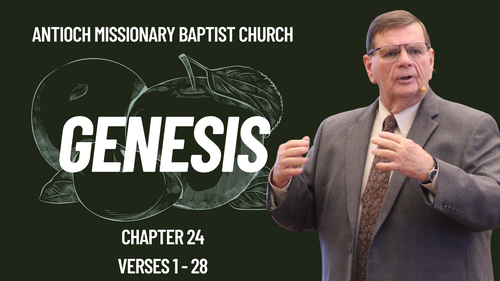
Sermon Takeaway 11/30/2025

Living in the Land of Promise: Taking the First Step of Faith
There's something profoundly challenging about living by faith rather than by sight. We want concrete answers, guaranteed outcomes, and a roadmap that shows us exactly where we're going before we take a single step. Yet the biblical narrative consistently calls us to something different—to trust in God's promises even when we can't see the destination.
The Geography of Faith
Genesis 24 presents us with a fascinating picture of what it means to live in "the land of promise." Abraham, now 140 years old, has spent decades dwelling in Canaan—a land God promised to him and his descendants. Yet remarkably, after all those years, Abraham owns nothing in this promised land except a burial site. His son Isaac is 40 years old and unmarried, with no children to carry forward the promise that his descendants would be as numerous as the stars.
By worldly standards, Abraham's situation looks precarious at best. But the text tells us something remarkable: "the Lord had blessed Abraham in all things." How can this be? How can a man who owns virtually nothing in the land he was promised be considered blessed in all things?
The answer reveals a fundamental truth about faith: blessing isn't measured by what we possess, but by where we stand in relation to God's promises.
Abraham had learned through years of trial and error that the safest, most blessed place to be was squarely within God's will—in the land of promise. Every time he had ventured outside of it, whether to Egypt or elsewhere, trouble followed. But when he remained where God had placed him, trusting in God's word despite circumstances, blessing flowed.
By worldly standards, Abraham's situation looks precarious at best. But the text tells us something remarkable: "the Lord had blessed Abraham in all things." How can this be? How can a man who owns virtually nothing in the land he was promised be considered blessed in all things?
The answer reveals a fundamental truth about faith: blessing isn't measured by what we possess, but by where we stand in relation to God's promises.
Abraham had learned through years of trial and error that the safest, most blessed place to be was squarely within God's will—in the land of promise. Every time he had ventured outside of it, whether to Egypt or elsewhere, trouble followed. But when he remained where God had placed him, trusting in God's word despite circumstances, blessing flowed.
The Danger of Stepping Outside
For believers today, the "land of promise" isn't a geographical location—it's a spiritual position. We live in the land of promise when we stand firm on God's Word, trusting in the salvation secured through Jesus Christ, and walking in obedience to His commands.
The temptation to step outside this land is constant. The world offers immediate gratification, tangible results, and solutions that don't require faith. It's enticing to handle our problems through worldly means rather than through prayer and obedience. It's easier to compromise our convictions than to stand firm on biblical principles.
But just as Abraham discovered, stepping outside the land of promise invites trouble. When we try to navigate life's challenges through our own wisdom rather than God's Word, when we compromise our faith for temporary comfort, when we make decisions based on feelings rather than biblical truth—we place ourselves in spiritual danger.
The just shall live by faith, not by sight. Our confidence must rest in God's promises, not in what we can see or control.
The temptation to step outside this land is constant. The world offers immediate gratification, tangible results, and solutions that don't require faith. It's enticing to handle our problems through worldly means rather than through prayer and obedience. It's easier to compromise our convictions than to stand firm on biblical principles.
But just as Abraham discovered, stepping outside the land of promise invites trouble. When we try to navigate life's challenges through our own wisdom rather than God's Word, when we compromise our faith for temporary comfort, when we make decisions based on feelings rather than biblical truth—we place ourselves in spiritual danger.
The just shall live by faith, not by sight. Our confidence must rest in God's promises, not in what we can see or control.
The Principle of Unequal Yoking
One of the most practical applications from Genesis 24 concerns relationships and marriage. Abraham was adamant that Isaac must not marry a Canaanite woman—someone outside the covenant community. Instead, he sent his servant on a 900-mile journey to find a bride from among his own people.
Why such concern? Because spiritual unity in marriage matters profoundly.
The principle extends beyond Abraham's specific situation. The Scripture warns believers against being "unequally yoked" with unbelievers. This isn't about superiority or judgment—it's about the fundamental reality that marriage is designed to reflect the relationship between Christ and His church. When a believer marries an unbeliever, that picture becomes distorted from the start.
Many have rationalized that "love conquers all" or that they'll win their partner to faith after marriage. But this thinking underestimates the spiritual warfare involved and overestimates our ability to change another person's heart. The truth is sobering: the person you're dating is likely the best version of themselves you'll ever see. Marriage doesn't improve character; it reveals it.
Living in the land of promise means making decisions—even about relationships—based on God's Word rather than our emotions or desires.
Why such concern? Because spiritual unity in marriage matters profoundly.
The principle extends beyond Abraham's specific situation. The Scripture warns believers against being "unequally yoked" with unbelievers. This isn't about superiority or judgment—it's about the fundamental reality that marriage is designed to reflect the relationship between Christ and His church. When a believer marries an unbeliever, that picture becomes distorted from the start.
Many have rationalized that "love conquers all" or that they'll win their partner to faith after marriage. But this thinking underestimates the spiritual warfare involved and overestimates our ability to change another person's heart. The truth is sobering: the person you're dating is likely the best version of themselves you'll ever see. Marriage doesn't improve character; it reveals it.
Living in the land of promise means making decisions—even about relationships—based on God's Word rather than our emotions or desires.
The Servant's Journey: A Model of Faithful Obedience
The unnamed servant (likely Eliezer) provides a beautiful picture of faithful obedience. When given his assignment, he didn't demand to know every detail. He didn't require guaranteed success before he would begin. He simply prepared and went.
This is the kind of obedience God desires: immediate, trusting, and complete.
The journey wasn't easy—900 miles through difficult terrain with ten camels and supplies. But the servant didn't complain or hesitate. He understood something crucial: you'll never discover God's plan for the end of the journey until you start walking.
We often want God to show us the entire path before we take the first step. We want to know how things will work out, what challenges we'll face, and whether we'll succeed. But faith doesn't work that way. Faith takes the step without seeing the destination.
When the servant finally arrived at his destination, he prayed a simple, powerful prayer: "O Lord God of my master Abraham, please give me success this day." Notice the foundation of his prayer—not his own worthiness or effort, but the promises God had made to Abraham. He was living in the land of promise, trusting in God's covenant faithfulness.
This is the kind of obedience God desires: immediate, trusting, and complete.
The journey wasn't easy—900 miles through difficult terrain with ten camels and supplies. But the servant didn't complain or hesitate. He understood something crucial: you'll never discover God's plan for the end of the journey until you start walking.
We often want God to show us the entire path before we take the first step. We want to know how things will work out, what challenges we'll face, and whether we'll succeed. But faith doesn't work that way. Faith takes the step without seeing the destination.
When the servant finally arrived at his destination, he prayed a simple, powerful prayer: "O Lord God of my master Abraham, please give me success this day." Notice the foundation of his prayer—not his own worthiness or effort, but the promises God had made to Abraham. He was living in the land of promise, trusting in God's covenant faithfulness.
The Character of Rebecca
Rebecca's appearance in the narrative is striking. Before the servant finished praying, she appeared—a beautiful answer to a specific prayer. But what made her the right choice wasn't just timing or family connection; it was her character.
When asked for a drink, she not only provided water for the servant but volunteered to water all ten camels. This wasn't a small task—camels drink approximately 20 gallons of water each, meaning she drew around 200 gallons of water. This required significant physical effort and time.
The servant wisely waited until she completed the entire task. Anyone can start something; finishing requires character. Rebecca demonstrated servant-heartedness, diligence, and follow-through. These qualities revealed she was prepared for the role God had for her.
When the task was complete, Rebecca didn't hesitate. She ran to tell her family. The biblical narrative is filled with action, movement, and urgency. Faith is never passive.
When asked for a drink, she not only provided water for the servant but volunteered to water all ten camels. This wasn't a small task—camels drink approximately 20 gallons of water each, meaning she drew around 200 gallons of water. This required significant physical effort and time.
The servant wisely waited until she completed the entire task. Anyone can start something; finishing requires character. Rebecca demonstrated servant-heartedness, diligence, and follow-through. These qualities revealed she was prepared for the role God had for her.
When the task was complete, Rebecca didn't hesitate. She ran to tell her family. The biblical narrative is filled with action, movement, and urgency. Faith is never passive.
The Response of Worship
Perhaps the most beautiful moment in the entire account comes in verse 26: "Then the man bowed down his head and worshiped the Lord."
After the long journey, after the answered prayer, after discovering that God had led him to exactly the right place—the servant's immediate response was worship. He didn't congratulate himself on his successful navigation or clever prayer strategy. He gave glory to God.
Genuine worship flows from recognizing God's faithfulness. When we see how God has led us, provided for us, and fulfilled His promises, the natural response is to bow before Him in gratitude and praise.
This kind of worship is often missing in modern Christianity. We're quick to celebrate our achievements and slow to acknowledge God's hand in our success. We take credit for outcomes that only God could orchestrate. We forget that every good gift comes from above.
The church needs to recover this posture of worship—falling on our faces before the God of heaven, acknowledging His sovereignty, praising His faithfulness, and giving Him glory for all He has done.
After the long journey, after the answered prayer, after discovering that God had led him to exactly the right place—the servant's immediate response was worship. He didn't congratulate himself on his successful navigation or clever prayer strategy. He gave glory to God.
Genuine worship flows from recognizing God's faithfulness. When we see how God has led us, provided for us, and fulfilled His promises, the natural response is to bow before Him in gratitude and praise.
This kind of worship is often missing in modern Christianity. We're quick to celebrate our achievements and slow to acknowledge God's hand in our success. We take credit for outcomes that only God could orchestrate. We forget that every good gift comes from above.
The church needs to recover this posture of worship—falling on our faces before the God of heaven, acknowledging His sovereignty, praising His faithfulness, and giving Him glory for all He has done.
Taking the First Step
The question that emerges from this passage is deeply personal: Where are you in your faith journey?
Are you living in the land of promise, or have you wandered outside, trying to navigate life on your own terms? Have you accepted the promise of salvation through Jesus Christ, or are you still trying to earn your way to God?
For those who are believers, the next question is equally important: Are you on the path God has for you?
Many Christians live in a kind of spiritual limbo—saved but inactive, redeemed but directionless, forgiven but not following. They know they should be doing something for God, but they're waiting for perfect clarity, ideal circumstances, or complete confidence before they begin.
But here's the truth: You walk a mile by taking the first step.
You'll never get where God wants you to go until you start moving. You don't need to know every detail of the journey. You don't need guaranteed success. You don't need to feel completely ready.
You just need to take one step.
That step might be saying "yes" to a ministry opportunity you've been avoiding. It might be having a difficult conversation you've been postponing. It might be ending a relationship that's pulling you away from God. It might be starting a spiritual discipline you've been neglecting.
For some, that first step is accepting Christ as Savior—moving from death to life, from darkness to light, from being outside the covenant to becoming a child of promise.
For others, it's a step of deeper surrender—finally yielding that area of life you've been holding back, finally trusting God with that fear you've been nursing, finally obeying that clear command you've been rationalizing away.
Are you living in the land of promise, or have you wandered outside, trying to navigate life on your own terms? Have you accepted the promise of salvation through Jesus Christ, or are you still trying to earn your way to God?
For those who are believers, the next question is equally important: Are you on the path God has for you?
Many Christians live in a kind of spiritual limbo—saved but inactive, redeemed but directionless, forgiven but not following. They know they should be doing something for God, but they're waiting for perfect clarity, ideal circumstances, or complete confidence before they begin.
But here's the truth: You walk a mile by taking the first step.
You'll never get where God wants you to go until you start moving. You don't need to know every detail of the journey. You don't need guaranteed success. You don't need to feel completely ready.
You just need to take one step.
That step might be saying "yes" to a ministry opportunity you've been avoiding. It might be having a difficult conversation you've been postponing. It might be ending a relationship that's pulling you away from God. It might be starting a spiritual discipline you've been neglecting.
For some, that first step is accepting Christ as Savior—moving from death to life, from darkness to light, from being outside the covenant to becoming a child of promise.
For others, it's a step of deeper surrender—finally yielding that area of life you've been holding back, finally trusting God with that fear you've been nursing, finally obeying that clear command you've been rationalizing away.
The Promise of God's Guidance
The beautiful truth woven throughout Genesis 24 is that God guides those who step out in faith. The servant didn't have GPS or a detailed map
Watch the full sermon here:
Recent Takeaways
Archive
2026
2025
March
September
October
November
No Comments