
Sermon Takeaway 01/11/2026

Standing on the Solid Ground of Covenant
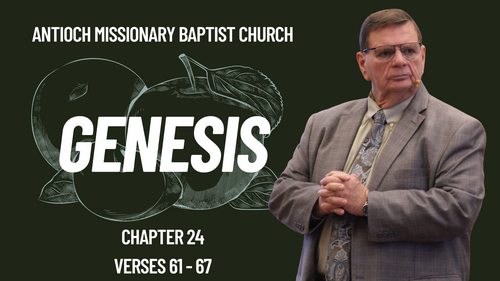
There's something profoundly unsettling about uncertainty. We live in a world where contracts are broken, promises are forgotten, and commitments are conditional. Even our most sacred relationships—marriages, friendships, family bonds—can feel fragile when built on shifting sand. But what if there was a foundation so solid, so unshakeable, that nothing could move it?
The story of Isaac and Rebekah in Genesis 24 offers us a glimpse into something far deeper than a simple love story. When Rebekah dismounted from her camel and covered herself with a veil upon seeing Isaac for the first time, she was entering into more than a marriage arrangement. She was stepping into a covenant—a binding, sacred promise that would shape not just her life, but the entire trajectory of God's redemptive plan for humanity.
The story of Isaac and Rebekah in Genesis 24 offers us a glimpse into something far deeper than a simple love story. When Rebekah dismounted from her camel and covered herself with a veil upon seeing Isaac for the first time, she was entering into more than a marriage arrangement. She was stepping into a covenant—a binding, sacred promise that would shape not just her life, but the entire trajectory of God's redemptive plan for humanity.
Understanding the Power of Covenant
Most of us have never truly encountered the concept of covenant in its biblical sense. We understand contracts—legal agreements that can be negotiated, amended, or broken with the right lawyer and enough loopholes. But a covenant operates on an entirely different plane.
A contract is transactional. A covenant is transformational.
When God established His covenant with Abraham in Genesis 15, He didn't ask Abraham to walk through the pieces of the sacrificed animals. Instead, God Himself—represented by a smoking furnace and a burning torch—passed between them. This wasn't a negotiation between equals. This was the Almighty God binding Himself to His promises, taking full responsibility for both sides of the agreement.
Think about the weight of that moment. Abraham, in a deep sleep with horror falling upon him, witnessed something extraordinary: God making an unconditional promise that depended entirely on God's faithfulness, not Abraham's performance.
A contract is transactional. A covenant is transformational.
When God established His covenant with Abraham in Genesis 15, He didn't ask Abraham to walk through the pieces of the sacrificed animals. Instead, God Himself—represented by a smoking furnace and a burning torch—passed between them. This wasn't a negotiation between equals. This was the Almighty God binding Himself to His promises, taking full responsibility for both sides of the agreement.
Think about the weight of that moment. Abraham, in a deep sleep with horror falling upon him, witnessed something extraordinary: God making an unconditional promise that depended entirely on God's faithfulness, not Abraham's performance.
Marriage as a Living Picture
Marriage, at its core, is meant to be a covenant relationship—not just a legal contract between two people, but a three-way bond between a husband, wife, and God. When we reduce marriage to merely a government contract, we strip it of its sacred power and eternal significance.
The struggles that inevitably come in marriage aren't signs that we've chosen the wrong person or that the relationship is doomed. They're the very forge where covenant love is refined and strengthened. Those difficult seasons, the arguments that seem insurmountable, the moments when you wonder if you can continue—these are precisely where covenant proves its worth.
Imagine a couple lying in bed years later, laughing at the foolish arguments they once had, the mountains they made out of molehills, the storms they weathered together. That laughter is the fruit of covenant—the joy that comes from choosing faithfulness over feelings, commitment over convenience.
Marriage isn't just about two people finding happiness together. It's a living, breathing picture of something far greater: Christ's relationship with His church. When the world sees marriages that endure, that demonstrate sacrificial love, that choose covenant over contract, they catch a glimpse of God's unwavering commitment to His people.
The struggles that inevitably come in marriage aren't signs that we've chosen the wrong person or that the relationship is doomed. They're the very forge where covenant love is refined and strengthened. Those difficult seasons, the arguments that seem insurmountable, the moments when you wonder if you can continue—these are precisely where covenant proves its worth.
Imagine a couple lying in bed years later, laughing at the foolish arguments they once had, the mountains they made out of molehills, the storms they weathered together. That laughter is the fruit of covenant—the joy that comes from choosing faithfulness over feelings, commitment over convenience.
Marriage isn't just about two people finding happiness together. It's a living, breathing picture of something far greater: Christ's relationship with His church. When the world sees marriages that endure, that demonstrate sacrificial love, that choose covenant over contract, they catch a glimpse of God's unwavering commitment to His people.
The Covenant That Changes Everything
But here's where the story gets even more remarkable. The same covenant principle that governs marriage is the foundation of our salvation.
Romans 10 lays it out with stunning simplicity: "If you confess with your mouth the Lord Jesus and believe in your heart that God has raised Him from the dead, you will be saved." Not "you might be saved if you work hard enough." Not "you'll be saved if you never mess up." Simply: you will be saved.
This is an unconditional covenant. God has done all the work. He became human so we could relate to Him. He lived the perfect life we couldn't live. He died the death we deserved. He conquered the grave to prove His power over sin and death. And then He offers it all to us freely—not based on our performance, but on His promise.
The problem in the Garden of Eden wasn't really about eating forbidden fruit. The fruit was simply evidence of a deeper issue: Adam and Eve didn't believe God's word. They questioned His truthfulness, His goodness, His authority. That's the essence of sin—not trusting God to be who He says He is.
Today, we make the same mistake when we add conditions to salvation. When we say, "I'm doing my best to live for God, and I hope it's enough," we're questioning the sufficiency of Christ's sacrifice. We're essentially saying, "I don't fully trust God's covenant. I need to add my own efforts to make it work."
Romans 10 lays it out with stunning simplicity: "If you confess with your mouth the Lord Jesus and believe in your heart that God has raised Him from the dead, you will be saved." Not "you might be saved if you work hard enough." Not "you'll be saved if you never mess up." Simply: you will be saved.
This is an unconditional covenant. God has done all the work. He became human so we could relate to Him. He lived the perfect life we couldn't live. He died the death we deserved. He conquered the grave to prove His power over sin and death. And then He offers it all to us freely—not based on our performance, but on His promise.
The problem in the Garden of Eden wasn't really about eating forbidden fruit. The fruit was simply evidence of a deeper issue: Adam and Eve didn't believe God's word. They questioned His truthfulness, His goodness, His authority. That's the essence of sin—not trusting God to be who He says He is.
Today, we make the same mistake when we add conditions to salvation. When we say, "I'm doing my best to live for God, and I hope it's enough," we're questioning the sufficiency of Christ's sacrifice. We're essentially saying, "I don't fully trust God's covenant. I need to add my own efforts to make it work."
The Danger of Emotion-Based Faith
Our emotions are unreliable foundations. One day we're on the mountaintop, feeling close to God, confident in our faith. The next day, something goes wrong—we fail, we sin, we face tragedy—and our emotions plummet. If our assurance of salvation rides that emotional roller coaster, we'll live in constant anxiety.
But covenant doesn't change with our feelings. When you're less than you expect to be—and certainly less than God expects—the relationship may feel strained, but the covenant remains intact. God's promise doesn't fluctuate with your performance.
This is why confession matters. When we sin, we confess not to get saved again, but to remove the barrier that our sin creates in our fellowship with God. The covenant relationship remains secure because it's based on His faithfulness, not ours.
But covenant doesn't change with our feelings. When you're less than you expect to be—and certainly less than God expects—the relationship may feel strained, but the covenant remains intact. God's promise doesn't fluctuate with your performance.
This is why confession matters. When we sin, we confess not to get saved again, but to remove the barrier that our sin creates in our fellowship with God. The covenant relationship remains secure because it's based on His faithfulness, not ours.
Coming to the Table
The Lord's Supper serves as a powerful reminder of this covenant. The broken bread represents Christ's body, broken for us. The cup represents His blood, shed for our salvation. When we partake of these elements, we're not earning anything or proving anything. We're simply remembering and affirming what He has already accomplished.
Every time we come to this table, we're faced with a choice: Will we trust God's simple word, or will we complicate it with our own additions? Will we rest in His finished work, or will we anxiously try to add our own efforts to the equation?
The invitation is clear. Not to work harder, not to be better, not to somehow make yourself worthy. The invitation is simply to believe—to take God at His word and rest in the covenant He has established through Christ.
Every time we come to this table, we're faced with a choice: Will we trust God's simple word, or will we complicate it with our own additions? Will we rest in His finished work, or will we anxiously try to add our own efforts to the equation?
The invitation is clear. Not to work harder, not to be better, not to somehow make yourself worthy. The invitation is simply to believe—to take God at His word and rest in the covenant He has established through Christ.
That's the solid ground we stand on. Not our goodness, but His. Not our faithfulness, but His. Not our promises, but His covenant—unbreakable, unconditional, and eternally secure.
Watch the full sermon here:
Recent Takeaways
Archive
2026
January
October
2025
March
September
October
November
No Comments