
Sermon Takeaway 03/01/2026

Living by Faith: Moving Beyond Second-Hand Belief
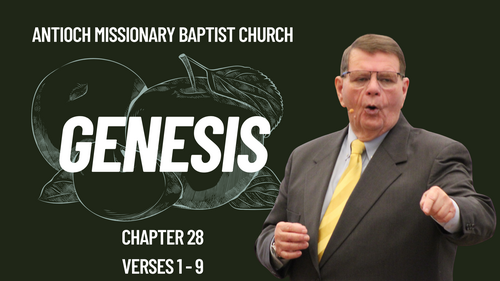
The story of Jacob and Esau presents us with one of Scripture's most compelling contrasts between two ways of living as believers. These twin brothers, both part of God's covenant family, both destined for His blessings, took radically different paths. Their journeys illuminate a question that confronts every person who claims faith in God: Will I live by genuine faith, or will I try to navigate the spiritual life through my own understanding and effort?
The Foundation of Real Faith
Genesis 28 opens with a pivotal moment. Isaac sends Jacob away to find a wife among his own people, away from the pagan influences of Canaan. But this isn't just about marriage customs. It's about preserving a lineage through which God's redemptive plan would unfold. The stakes couldn't be higher, and the characters couldn't be more flawed.
Jacob was a mama's boy, unprepared for the harsh realities of survival in the ancient world. He had no wilderness skills, no caravan of camels, no wealth to smooth his way. When he finally stopped to rest on his journey, he had nothing but a stone for a pillow. This was a young man stripped of every comfort, every advantage, every security.
Yet Jacob did something remarkable: he obeyed. He stepped out on a dangerous journey of several hundred miles based on what he had been told about God's promises. He hadn't yet encountered God personally. His faith was built on the testimony of his father Isaac and grandfather Abraham. It was, in essence, a second-hand faith—but it was faith that moved him to action.
Jacob was a mama's boy, unprepared for the harsh realities of survival in the ancient world. He had no wilderness skills, no caravan of camels, no wealth to smooth his way. When he finally stopped to rest on his journey, he had nothing but a stone for a pillow. This was a young man stripped of every comfort, every advantage, every security.
Yet Jacob did something remarkable: he obeyed. He stepped out on a dangerous journey of several hundred miles based on what he had been told about God's promises. He hadn't yet encountered God personally. His faith was built on the testimony of his father Isaac and grandfather Abraham. It was, in essence, a second-hand faith—but it was faith that moved him to action.
The Evidence That Demands a Response
Here's a truth we often overlook: genuine faith is not a leap into darkness. It's a step into light based on solid evidence.
The historical reality of Jesus Christ stands as the cornerstone of Christian faith. Outside the Bible, historical records confirm that a man named Jesus lived, taught, was crucified under Roman authority, and that His followers claimed to witness His resurrection. These weren't people dying for an abstract philosophy they hoped might be true. They were witnesses who saw something with their own eyes and were willing to die rather than deny what they knew.
A person might die for something they believe is true. But no one dies for what they know is a lie. The early followers of Jesus had everything to lose and nothing worldly to gain. They faced persecution, exile, and martyrdom. If Jesus hadn't truly risen, they could have simply admitted the body had been moved or stolen. Instead, they testified to His resurrection with their very lives.
This is the kind of evidence that transforms second-hand faith into personal conviction. It's not about emotional experiences or family tradition. It's about examining the facts of history and making a decision based on truth.
The historical reality of Jesus Christ stands as the cornerstone of Christian faith. Outside the Bible, historical records confirm that a man named Jesus lived, taught, was crucified under Roman authority, and that His followers claimed to witness His resurrection. These weren't people dying for an abstract philosophy they hoped might be true. They were witnesses who saw something with their own eyes and were willing to die rather than deny what they knew.
A person might die for something they believe is true. But no one dies for what they know is a lie. The early followers of Jesus had everything to lose and nothing worldly to gain. They faced persecution, exile, and martyrdom. If Jesus hadn't truly risen, they could have simply admitted the body had been moved or stolen. Instead, they testified to His resurrection with their very lives.
This is the kind of evidence that transforms second-hand faith into personal conviction. It's not about emotional experiences or family tradition. It's about examining the facts of history and making a decision based on truth.
Two Paths: Faith vs. Flesh
Esau represents a different approach entirely. He was a man of the earth—strong, capable, skilled at hunting and farming. He loved his father and wanted to please him. When he saw that Isaac blessed Jacob for marrying within the family, Esau tried to correct his mistake. He went and married a cousin from Ishmael's family, thinking this would earn his father's approval and secure God's blessing.
But Esau was trying to work things out on his own terms. He saw what blessed people did and tried to imitate their actions without surrendering his heart. He wanted the benefits of faith without the walk of faith.
This pattern repeats endlessly in churches today. People observe what faithful believers do—attending services, reading Scripture, praying—and attempt to replicate these behaviors, hoping they'll produce the same results. They move from church to church, looking for something they can't quite name. They feel unsettled, bored, wondering why their spiritual life feels like such a burden.
The problem isn't the practices. The problem is trying to manufacture spiritual results through human effort rather than stepping out in faith and allowing God to work.
But Esau was trying to work things out on his own terms. He saw what blessed people did and tried to imitate their actions without surrendering his heart. He wanted the benefits of faith without the walk of faith.
This pattern repeats endlessly in churches today. People observe what faithful believers do—attending services, reading Scripture, praying—and attempt to replicate these behaviors, hoping they'll produce the same results. They move from church to church, looking for something they can't quite name. They feel unsettled, bored, wondering why their spiritual life feels like such a burden.
The problem isn't the practices. The problem is trying to manufacture spiritual results through human effort rather than stepping out in faith and allowing God to work.
The Journey of Faith Begins
What does it actually mean to live by faith? Hebrews 11:1 provides the definition: "Faith is the substance of things hoped for, the evidence of things not seen."
Faith means taking what you know to be true about God—based on Scripture, history, and the testimony of faithful witnesses—and acting on that truth even when you cannot see the full outcome. It means believing God's character and promises are reliable enough to stake your life on, even when circumstances seem uncertain or dangerous.
Jacob's journey illustrates this beautifully. He didn't know what awaited him in Haran. He had no guarantee of safety, success, or even survival. But he believed what his father told him about God's promises, and he put one foot in front of the other. That's faith in action.
Living by faith doesn't mean you have everything figured out. It doesn't mean you're perfect or that your life is free from flaws and failures. It means you've stopped trying to earn God's favor through your own abilities and instead cast yourself entirely on His mercy and guidance.
Faith means taking what you know to be true about God—based on Scripture, history, and the testimony of faithful witnesses—and acting on that truth even when you cannot see the full outcome. It means believing God's character and promises are reliable enough to stake your life on, even when circumstances seem uncertain or dangerous.
Jacob's journey illustrates this beautifully. He didn't know what awaited him in Haran. He had no guarantee of safety, success, or even survival. But he believed what his father told him about God's promises, and he put one foot in front of the other. That's faith in action.
Living by faith doesn't mean you have everything figured out. It doesn't mean you're perfect or that your life is free from flaws and failures. It means you've stopped trying to earn God's favor through your own abilities and instead cast yourself entirely on His mercy and guidance.
The Flawed Vessels God Uses
Here's the encouraging truth at the heart of this passage: God uses deeply flawed people. Isaac, Rebekah, Jacob, and Esau were all supremely imperfect. None of them deserved God's blessings based on their own merit. Yet God's plan moved forward through them.
The same is true today. Every believer is flawed, scarred by sin, and unworthy of God's grace. But God doesn't use us based on who we are. He uses us based on who He is. When we step out in faith, believing that He can work through our inadequacies, He meets us on that journey and adds faith upon faith.
The question isn't whether you're qualified. You're not. None of us are. The question is whether you'll believe God is who He says He is, accept the evidence He's provided, and start walking in faith—or whether you'll keep trying to figure it out on your own.
The same is true today. Every believer is flawed, scarred by sin, and unworthy of God's grace. But God doesn't use us based on who we are. He uses us based on who He is. When we step out in faith, believing that He can work through our inadequacies, He meets us on that journey and adds faith upon faith.
The question isn't whether you're qualified. You're not. None of us are. The question is whether you'll believe God is who He says He is, accept the evidence He's provided, and start walking in faith—or whether you'll keep trying to figure it out on your own.
Which Path Will You Choose?
There are really only two types of believers: those who walk by faith, trusting God's character and promises even when the path is unclear, and those who try to navigate the Christian life through their own understanding and effort.
The first group experiences intimacy with God, growth in spiritual understanding, and peace even in difficult circumstances. The second group remains perpetually unsettled, wondering why their faith feels empty and why God seems distant.
The difference isn't God's willingness to reveal Himself. It's our willingness to surrender control and step out in faith. God rewards those who diligently seek Him, but that seeking must begin with genuine faith—faith that acts on truth rather than trying to manufacture results through religious activity.
The first group experiences intimacy with God, growth in spiritual understanding, and peace even in difficult circumstances. The second group remains perpetually unsettled, wondering why their faith feels empty and why God seems distant.
The difference isn't God's willingness to reveal Himself. It's our willingness to surrender control and step out in faith. God rewards those who diligently seek Him, but that seeking must begin with genuine faith—faith that acts on truth rather than trying to manufacture results through religious activity.
The journey of faith may lead through uncertain terrain with nothing but a stone for a pillow. But it's the only path that leads to the abundant life God promises—a life of knowing Him personally, not just knowing about Him.
Which path will you choose?
Which path will you choose?
Watch the full sermon here:
Recent Takeaways
Archive
2026
January
2025
March
September
October
November
No Comments