
Sermon Takeaway 04/19/2026

The Uncomfortable Truth About Our Hearts: Lessons from Jacob's Family
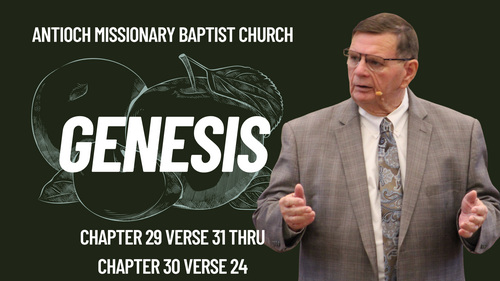
The story of Jacob, Rachel, and Leah reads more like a modern drama than an ancient biblical account. It's messy, uncomfortable, and painfully human. Yet within this complicated family dynamic lies one of Scripture's most profound revelations about the human condition—and our desperate need for God.
But life has a way of bringing our past into our present.
But life has a way of bringing our past into our present.
A Family Built on Deception
Jacob had worked seven years for the woman he loved, Rachel. On his wedding night, he discovered he'd been tricked into marrying her older sister, Leah. Within a week, he married Rachel too, creating a household destined for conflict. One man, two wives, and a competition that would define their lives.
The tension is palpable from the beginning. Genesis tells us plainly: "When the Lord saw that Leah was unloved, he opened her womb, but Rachel was barren." Here we find two women, sisters no less, trapped in a rivalry neither chose but both perpetuated.
The tension is palpable from the beginning. Genesis tells us plainly: "When the Lord saw that Leah was unloved, he opened her womb, but Rachel was barren." Here we find two women, sisters no less, trapped in a rivalry neither chose but both perpetuated.
The Desperate Cry of Unloved Hearts
Listen to Leah's voice as she names her children. Each name reveals the ache in her heart:
Reuben - "The Lord has surely looked on my affliction. Now my husband will love me."
Simeon - "Because the Lord has heard that I am unloved, He has given me this son also."
Levi - "Now this time my husband will become attached to me because I have borne him three sons."
Judah - "Now I will praise the Lord."
Four sons, and still the longing for her husband's affection. Can you hear the pathos? The hope that fades with each birth, only to flicker again with the next pregnancy? Leah was using children—human beings—as bargaining chips for love.
Meanwhile, Rachel watched. She had Jacob's love but not his children. Her desperation grew with each nephew born. "Give me children, or I'll die!" she cried to Jacob. The pain of infertility combined with watching her sister's fertility created a perfect storm of jealousy and despair.
Reuben - "The Lord has surely looked on my affliction. Now my husband will love me."
Simeon - "Because the Lord has heard that I am unloved, He has given me this son also."
Levi - "Now this time my husband will become attached to me because I have borne him three sons."
Judah - "Now I will praise the Lord."
Four sons, and still the longing for her husband's affection. Can you hear the pathos? The hope that fades with each birth, only to flicker again with the next pregnancy? Leah was using children—human beings—as bargaining chips for love.
Meanwhile, Rachel watched. She had Jacob's love but not his children. Her desperation grew with each nephew born. "Give me children, or I'll die!" she cried to Jacob. The pain of infertility combined with watching her sister's fertility created a perfect storm of jealousy and despair.
When Rivalry Turns Toxic
The situation deteriorated as both women gave their handmaids to Jacob as concubines. Now there were four women in the household, each bearing children, each naming them as weapons in an ongoing war.
Rachel named her handmaid's son Dan (judge): "God has judged in my favor."
She named the second Naphtali (wrestling): "I have wrestled with my sister and have prevailed."
Leah responded with her own handmaid's children—Gad (troop) and Asher (happy). The message was clear: "I have more sons than you. I'm winning."
The rivalry reached its peak when Reuben found mandrakes in the field, plants believed to promote fertility. Rachel begged Leah for some. Leah's response cuts to the heart: "Is it a small matter that you've taken away my husband? Would you also take away my son's mandrakes?"
These words reveal the depth of pain. In Leah's mind, Rachel had stolen what should have been hers—her husband's love. Never mind that Jacob had loved Rachel first. Never mind that Leah had been the instrument of her father's deception. Sin doesn't deal in facts; it deals in feelings and perceived injustices.
Rachel named her handmaid's son Dan (judge): "God has judged in my favor."
She named the second Naphtali (wrestling): "I have wrestled with my sister and have prevailed."
Leah responded with her own handmaid's children—Gad (troop) and Asher (happy). The message was clear: "I have more sons than you. I'm winning."
The rivalry reached its peak when Reuben found mandrakes in the field, plants believed to promote fertility. Rachel begged Leah for some. Leah's response cuts to the heart: "Is it a small matter that you've taken away my husband? Would you also take away my son's mandrakes?"
These words reveal the depth of pain. In Leah's mind, Rachel had stolen what should have been hers—her husband's love. Never mind that Jacob had loved Rachel first. Never mind that Leah had been the instrument of her father's deception. Sin doesn't deal in facts; it deals in feelings and perceived injustices.
Why This Story Matters
This uncomfortable narrative appears in Scripture not to entertain us but to expose us. These twelve sons would become the heads of the twelve tribes of Israel—the nation through which God would bring salvation to the world. Their names appear in lists throughout Scripture: in Genesis 49 when Jacob blesses them, in Deuteronomy 33 when Moses blesses the tribes, and finally in Revelation when the eternal purposes of God are revealed.
The progression of these lists tells its own story. The birth order changes. Some names disappear. Others are added. The family that began in dysfunction would be transformed by God's purposes—but not without cost, not without revelation of who they truly were.
The progression of these lists tells its own story. The birth order changes. Some names disappear. Others are added. The family that began in dysfunction would be transformed by God's purposes—but not without cost, not without revelation of who they truly were.
The Mirror We'd Rather Not Look Into
Here's the truth this passage forces us to confront: we are these people.
We are Jacob, trying to navigate life and finding ourselves in situations far more complicated than we ever imagined. We are Leah, desperately seeking love and validation in all the wrong places. We are Rachel, blessed in some ways but consumed by what we lack. We are the handmaids, used by others in their games of one-upmanship.
We are conniving. We are deceitful. Most dangerously, we deceive ourselves.
We convince ourselves that God is okay with our disobedience. We tell ourselves that while others may be wrong, our lives are satisfactory. We compare ourselves to those around us and come out favorably, in our own minds. This self-deception keeps us from the very thing we need most: casting ourselves completely on God's mercy.
We are Jacob, trying to navigate life and finding ourselves in situations far more complicated than we ever imagined. We are Leah, desperately seeking love and validation in all the wrong places. We are Rachel, blessed in some ways but consumed by what we lack. We are the handmaids, used by others in their games of one-upmanship.
We are conniving. We are deceitful. Most dangerously, we deceive ourselves.
We convince ourselves that God is okay with our disobedience. We tell ourselves that while others may be wrong, our lives are satisfactory. We compare ourselves to those around us and come out favorably, in our own minds. This self-deception keeps us from the very thing we need most: casting ourselves completely on God's mercy.
The Darkness Before the Light
No one comes to Jesus for lasting salvation without first understanding the darkness they're in. Your sin—no matter how trivial it may seem to you—is an absolute atrocity against a holy God. God is absolutely pure, and only those who are holy and pure can dwell in His presence.
This isn't meant to discourage but to awaken. When we truly see ourselves as we are, we stop trying to fix ourselves. We stop walking out each day thinking, "I've got this. I'm going to be what I ought to be today." That's the day we're destined for defeat, because we simply don't have the ability within ourselves.
This isn't meant to discourage but to awaken. When we truly see ourselves as we are, we stop trying to fix ourselves. We stop walking out each day thinking, "I've got this. I'm going to be what I ought to be today." That's the day we're destined for defeat, because we simply don't have the ability within ourselves.
Walking in Humility
The proper response to passages like this is humility. We must look at Jacob's family and say, "Lord, this is my heart. If left to my own devices, this is what I'll do, that which pleases me and not that which pleases You. I am selfish, self-centered, conceited, and deluded. Give me vision to see."
Our days should begin not with confidence in our own ability but with a plea: "God, would You walk before me today? Would You guard my heart? Would You show me the way?"
The days we let God go before us, when we allow the Holy Spirit to lead, are the days we can be successful in serving God. The days we walk in our own ability, we walk straight into the mess we see in Genesis 29-30.
Our days should begin not with confidence in our own ability but with a plea: "God, would You walk before me today? Would You guard my heart? Would You show me the way?"
The days we let God go before us, when we allow the Holy Spirit to lead, are the days we can be successful in serving God. The days we walk in our own ability, we walk straight into the mess we see in Genesis 29-30.
A Nation in Need of Repentance
We live in a culture that has forgotten who we are. We've plunged into a moral cesspool, walking around as if everything is fine when it clearly isn't. Language has become coarse. Modesty has been abandoned. Common decency seems quaint and outdated.
But the problem isn't "out there." It's in here—in our hearts, in the church, in the family of God. Until we humble ourselves and realize our potential for evil apart from God's grace, we'll continue the descent.
But the problem isn't "out there." It's in here—in our hearts, in the church, in the family of God. Until we humble ourselves and realize our potential for evil apart from God's grace, we'll continue the descent.
The Hope Beyond the Mess
Here's the beautiful truth hidden in this difficult passage: God works through mess. These twelve sons, born of rivalry and pain, became the foundation of God's chosen people. Through this dysfunctional family came priests and kings. Through them came prophets and psalms. Through them, ultimately, came Jesus.
God doesn't wait for us to clean ourselves up before He uses us. He meets us in our mess, exposes our sin, and offers redemption. But we must be willing to see ourselves clearly, to stop making excuses, to humble ourselves and admit our desperate need.
There's no shame in admitting what God already knows about us. The shame is in pretending we're something we're not, in hiding from the truth that could set us free.
Will you open your eyes today? Will you ask God to reveal your true self and then show you what you can be in Christ? Will you bend your knee and say, "Yes, Lord, that is true about me. I need You"?
That's not a comfortable prayer. But it's the beginning of living in reality, of truly becoming the person God created you to be. And that's where transformation begins—not in our strength, but in our surrender.
God doesn't wait for us to clean ourselves up before He uses us. He meets us in our mess, exposes our sin, and offers redemption. But we must be willing to see ourselves clearly, to stop making excuses, to humble ourselves and admit our desperate need.
There's no shame in admitting what God already knows about us. The shame is in pretending we're something we're not, in hiding from the truth that could set us free.
Will you open your eyes today? Will you ask God to reveal your true self and then show you what you can be in Christ? Will you bend your knee and say, "Yes, Lord, that is true about me. I need You"?
That's not a comfortable prayer. But it's the beginning of living in reality, of truly becoming the person God created you to be. And that's where transformation begins—not in our strength, but in our surrender.
Watch the full sermon here:
Recent Takeaways
Archive
2026
January
2025
March
September
October
November
No Comments