
Sermon Takeaway 06/14/2026

The Danger of Pitching Your Tent Toward the World
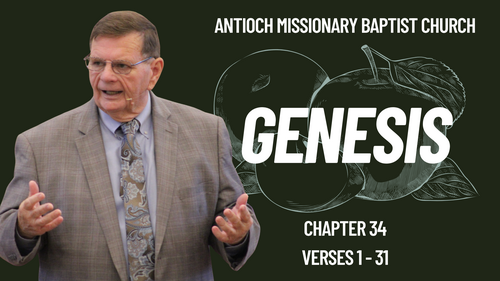
The story of Jacob's family in Genesis 34 is uncomfortable. It's brutal, messy, and reveals the ugliest aspects of human nature. Yet this is precisely why it appears in Scripture. The Bible doesn't sanitize the stories of faith's patriarchs. It shows us the good, the bad, and the devastating consequences of sin.
This ancient account holds a mirror to our modern lives, revealing truths about spiritual compromise that remain as relevant today as they were thousands of years ago.
This ancient account holds a mirror to our modern lives, revealing truths about spiritual compromise that remain as relevant today as they were thousands of years ago.
When Proximity Becomes Compromise
Jacob had finally made it to the promised land. His tumultuous reunion with his brother Esau was behind him. He had crossed the Jordan River and settled near the city of Shechem. For six or seven years, he lived there, seemingly at peace. On the surface, everything appeared fine.
But Jacob wasn't where God wanted him to be.
God had called him to Bethel, the "house of God," where Jacob had first encountered the Lord and made sacred vows. Instead, Jacob planted his tent toward Shechem, drawn by the conveniences and comforts the world offered. This seemingly small compromise set in motion a chain of devastating events.
His daughter Dinah, around fifteen or sixteen years old, began visiting the girls of Shechem. She made friends, likely adopted their dress and speech, and became entangled in that world. There she caught the attention of a young man named Shechem, the prince of the region, who
became obsessed with her. In a horrific act of violence, he raped her.
Afterward, claiming to love Dinah, Shechem asked his father Hamor to arrange a marriage. What followed was a web of deceit, violence, and revenge that left an entire village of men slaughtered by Jacob's sons Simeon and Levi, who used the sacred rite of circumcision as a weapon of deception.
The patriarch's compromise had led to catastrophe.
But Jacob wasn't where God wanted him to be.
God had called him to Bethel, the "house of God," where Jacob had first encountered the Lord and made sacred vows. Instead, Jacob planted his tent toward Shechem, drawn by the conveniences and comforts the world offered. This seemingly small compromise set in motion a chain of devastating events.
His daughter Dinah, around fifteen or sixteen years old, began visiting the girls of Shechem. She made friends, likely adopted their dress and speech, and became entangled in that world. There she caught the attention of a young man named Shechem, the prince of the region, who
became obsessed with her. In a horrific act of violence, he raped her.
Afterward, claiming to love Dinah, Shechem asked his father Hamor to arrange a marriage. What followed was a web of deceit, violence, and revenge that left an entire village of men slaughtered by Jacob's sons Simeon and Levi, who used the sacred rite of circumcision as a weapon of deception.
The patriarch's compromise had led to catastrophe.
The Seeds We Sow
Jacob's sons had grown up in a dysfunctional family. They had watched their father and grandfather Laban lie, cheat, and manipulate. These patterns had taken root in their hearts. When crisis came, they responded not with righteousness but with the same deception they had witnessed.
This reveals a sobering truth: salvation doesn't erase the consequences of past sins. While God's judicial system declares our sins forgiven, the seeds we've sown continue to grow. The patterns we've established, the examples we've set, the compromises we've made—these have ongoing effects that must be addressed.
Jacob was learning to walk with God, but his old nature still needed to be rooted out. God, in His love, was exposing these hidden issues so they could be dealt with.
This reveals a sobering truth: salvation doesn't erase the consequences of past sins. While God's judicial system declares our sins forgiven, the seeds we've sown continue to grow. The patterns we've established, the examples we've set, the compromises we've made—these have ongoing effects that must be addressed.
Jacob was learning to walk with God, but his old nature still needed to be rooted out. God, in His love, was exposing these hidden issues so they could be dealt with.
The Real Meaning of Murder and Adultery
When Jesus preached His Sermon on the Mount, He took the commandments everyone thought they were keeping and revealed their true depth.
"You have heard that it was said to those of old, 'You shall not murder,'" Jesus said. "But I say to you that whoever is angry with his brother without cause shall be in danger of the judgment."
Suddenly, murder wasn't just a physical act. It included uncontrolled anger, demeaning others, treating people as fools, elevating ourselves above our brothers and sisters. By this standard, how many of us have "murdered" someone this week? When we explode at the driver who cuts us off, when we speak condescendingly to a family member, when we harbor rage in our hearts—we stand guilty.
Jesus continued: "You have heard that it was said to those of old, 'You shall not commit adultery.' But I say to you that whoever looks at a woman to lust for her has already committed adultery with her in his heart."
This hits even closer to home in our modern world. We live in an age where sensuality and sexual imagery stream directly into our homes through screens we pay for and invite in. Hollywood presents unattainable images designed to provoke lust. As summer approaches, modesty disappears. Provocative dress becomes the norm.
If we haven't guarded our hearts and disciplined our flesh, it's nearly impossible to navigate this world without being assaulted by images and temptations. And when we look with lust, when we allow our hearts to desire what we shouldn't have, when we mentally participate in what we're viewing—God reckons it as if we had committed the physical act.
By these standards, we all stand with Simeon, Levi, and Jacob. We are all guilty.
"You have heard that it was said to those of old, 'You shall not murder,'" Jesus said. "But I say to you that whoever is angry with his brother without cause shall be in danger of the judgment."
Suddenly, murder wasn't just a physical act. It included uncontrolled anger, demeaning others, treating people as fools, elevating ourselves above our brothers and sisters. By this standard, how many of us have "murdered" someone this week? When we explode at the driver who cuts us off, when we speak condescendingly to a family member, when we harbor rage in our hearts—we stand guilty.
Jesus continued: "You have heard that it was said to those of old, 'You shall not commit adultery.' But I say to you that whoever looks at a woman to lust for her has already committed adultery with her in his heart."
This hits even closer to home in our modern world. We live in an age where sensuality and sexual imagery stream directly into our homes through screens we pay for and invite in. Hollywood presents unattainable images designed to provoke lust. As summer approaches, modesty disappears. Provocative dress becomes the norm.
If we haven't guarded our hearts and disciplined our flesh, it's nearly impossible to navigate this world without being assaulted by images and temptations. And when we look with lust, when we allow our hearts to desire what we shouldn't have, when we mentally participate in what we're viewing—God reckons it as if we had committed the physical act.
By these standards, we all stand with Simeon, Levi, and Jacob. We are all guilty.
The Path Back to Bethel
So what's the remedy? How do we escape the gravitational pull of the world?
First, don't pitch your tent toward Shechem. Don't position yourself where temptation has easy access. Don't disobey God and place yourself in situations you have no business being in. The devil will always provide an excuse. The world will make compromise seem reasonable, even beneficial.
Jacob saw things he liked in Shechem. He thought his family would want them. It seemed convenient. But convenience is a poor substitute for obedience.
Second, and most importantly: return to Bethel.
When Jacob's world was collapsing around him, when the consequences of his compromise were devastating his family, God spoke: "Arise, go up to Bethel and dwell there."
The remedy was simple: Go back to the house of God. Return to where you met Him. Allow God to cleanse you, speak to your heart, and become the motivating force in your life again.
This remains the answer today. When we've wandered, when we've pitched our tent toward the world, when we're enjoying worldly pleasures so much that we wonder if we really need to do all those things God commanded—we need to return to Bethel.
First, don't pitch your tent toward Shechem. Don't position yourself where temptation has easy access. Don't disobey God and place yourself in situations you have no business being in. The devil will always provide an excuse. The world will make compromise seem reasonable, even beneficial.
Jacob saw things he liked in Shechem. He thought his family would want them. It seemed convenient. But convenience is a poor substitute for obedience.
Second, and most importantly: return to Bethel.
When Jacob's world was collapsing around him, when the consequences of his compromise were devastating his family, God spoke: "Arise, go up to Bethel and dwell there."
The remedy was simple: Go back to the house of God. Return to where you met Him. Allow God to cleanse you, speak to your heart, and become the motivating force in your life again.
This remains the answer today. When we've wandered, when we've pitched our tent toward the world, when we're enjoying worldly pleasures so much that we wonder if we really need to do all those things God commanded—we need to return to Bethel.
The Cost of Worldly Compromise
The world promises pleasure, wealth, fame, and fulfillment. It whispers that these things will make us feel good, that we deserve them, that we can handle them. This is the devil's lie.
Worldly pleasures may feel good temporarily, but in eternity, we'll pay for them far longer than we enjoyed them. The cost is simply too high to allow fleshly desires to rule over us.
True believers are true worshipers who regularly gather in God's house. This isn't about religious obligation but spiritual necessity. We cannot survive on our own. The world is too strong, too subtle, too persistent. It will slowly but increasingly pull us to itself until one day we look around and wonder how we got so far from God.
Worldly pleasures may feel good temporarily, but in eternity, we'll pay for them far longer than we enjoyed them. The cost is simply too high to allow fleshly desires to rule over us.
True believers are true worshipers who regularly gather in God's house. This isn't about religious obligation but spiritual necessity. We cannot survive on our own. The world is too strong, too subtle, too persistent. It will slowly but increasingly pull us to itself until one day we look around and wonder how we got so far from God.
Where Is Your Face Set?
Each of us is either at Bethel or journeying toward Shechem. There's no neutral ground.
If you've stopped praying regularly, if your Bible sits unopened, if church attendance has become sporadic or begrudging, if you do just enough to keep your conscience quiet—the world has its tentacles in you.
The longer you wait to turn back, the harder it becomes. Wandering doesn't get easier to reverse. It gets harder.
But there's hope. God still calls: "Return to Bethel. Come back to my house. Let me be your all in all."
When we return to Him, admit our need, and surrender our self-sufficiency, the supernatural power and strength of God will reside in our lives. Only then can we withstand the world's assaults.
The question is simple but profound: Where have you set your face? Toward Shechem or toward Bethel?
Turn back now. Don't wait another minute. Come home to the house of God.
If you've stopped praying regularly, if your Bible sits unopened, if church attendance has become sporadic or begrudging, if you do just enough to keep your conscience quiet—the world has its tentacles in you.
The longer you wait to turn back, the harder it becomes. Wandering doesn't get easier to reverse. It gets harder.
But there's hope. God still calls: "Return to Bethel. Come back to my house. Let me be your all in all."
When we return to Him, admit our need, and surrender our self-sufficiency, the supernatural power and strength of God will reside in our lives. Only then can we withstand the world's assaults.
The question is simple but profound: Where have you set your face? Toward Shechem or toward Bethel?
Turn back now. Don't wait another minute. Come home to the house of God.
Watch the full sermon here:
Recent Takeaways
Archive
2026
January
2025
March
September
October
November
No Comments