
Sermon Takeaway 10/11/2026

The Wheelbarrow and the Pit: Trusting a God Who Was Never Surprised
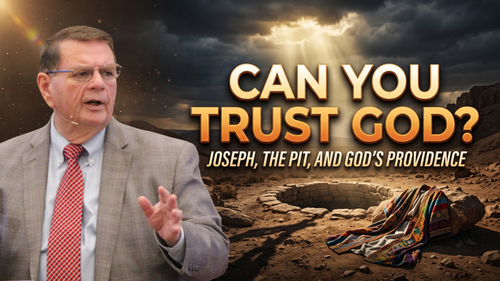
There is a moment in the book of Genesis that is easy to rush past. A seventeen-year-old boy, wearing a coat his father gave him, walks across open fields looking for his brothers. He does not know what is waiting for him. His brothers see him coming from a distance, and before he even arrives, murder is already forming in their hearts. They strip him of his coat, throw him into a dry pit, and sit down to eat a meal.
It is a brutal scene. It reads like a story of family dysfunction, jealousy, and cruelty. And it is all of those things. But it is also something far greater. It is a window into how God works in a world where human beings are fully free to make terrible choices, and yet somehow, the purposes of God are never derailed.
This is the story of Joseph, found in Genesis 37, and it raises one of the most profound questions a person can sit with: How can a sovereign God allow suffering, cruelty, and injustice, and still be working out something good?
It is a brutal scene. It reads like a story of family dysfunction, jealousy, and cruelty. And it is all of those things. But it is also something far greater. It is a window into how God works in a world where human beings are fully free to make terrible choices, and yet somehow, the purposes of God are never derailed.
This is the story of Joseph, found in Genesis 37, and it raises one of the most profound questions a person can sit with: How can a sovereign God allow suffering, cruelty, and injustice, and still be working out something good?
When Doing Right Makes You a Target
Joseph was not perfect, but the text makes clear that he had a character bent toward integrity. When his brothers were doing wrong in Shechem, he reported it to his father. When he later found himself in Potiphar's house in Egypt, he refused the advances of Potiphar's wife and declared he would not sin against God. He was not naive. He was not weak. He simply had a standard he lived by, and that standard made him a target.
This is worth sitting with, because it is not an ancient problem. Living with integrity in a world that has abandoned it will always draw opposition. The person who works honestly while others cut corners, who speaks truthfully while others shade the truth, who holds to a moral standard while the culture around them has discarded one, will find themselves unwelcome in certain company. Joseph's brothers hated him so deeply they could not even offer him a common greeting. Their hatred was not really about the coat, or even the dreams. It was about the contrast his life created. His righteousness exposed their darkness.
This is worth sitting with, because it is not an ancient problem. Living with integrity in a world that has abandoned it will always draw opposition. The person who works honestly while others cut corners, who speaks truthfully while others shade the truth, who holds to a moral standard while the culture around them has discarded one, will find themselves unwelcome in certain company. Joseph's brothers hated him so deeply they could not even offer him a common greeting. Their hatred was not really about the coat, or even the dreams. It was about the contrast his life created. His righteousness exposed their darkness.
Providence: You Are Responsible for Your Choices
What Genesis 37 makes unmistakably clear is that God did not puppeteer these brothers into cruelty. They acted freely. Their hatred was their own. Their conspiracy was their own. Their decision to throw Joseph into that pit was their own. The apostle Paul wrote plainly in Galatians 6 that a person reaps what they sow. God does not absorb the blame for human sin. People stand accountable for their own decisions.
This matters because it removes a convenient excuse. It is tempting to look at the circumstances of life and conclude that if God is truly in control, then human choices must not really matter. But Scripture does not allow that conclusion. God's sovereignty does not erase human responsibility. Both are true at the same time. The brothers chose evil. They will answer for it. And yet, God was already at work through it.
This matters because it removes a convenient excuse. It is tempting to look at the circumstances of life and conclude that if God is truly in control, then human choices must not really matter. But Scripture does not allow that conclusion. God's sovereignty does not erase human responsibility. Both are true at the same time. The brothers chose evil. They will answer for it. And yet, God was already at work through it.
Sovereignty: God Was Never Surprised
Here is where the story becomes extraordinary. While the brothers were acting out their jealousy and rage, God was quietly doing something else entirely. Joseph's suffering was not a detour from the plan. It was the plan. God was positioning a man who would one day preserve an entire nation from famine, including the very brothers who threw him into that pit.
But the sovereignty of God in this passage reaches even further than Joseph's personal story. The details of what happened to Joseph in Genesis 37 form a picture that would not be fully painted for another two thousand years. A beloved son, sent by his father to his brothers. His brothers refusing to receive him. His robe stripped from him. His body cast into a pit. These are not accidental details. They are a portrait drawn centuries before its subject arrived.
When Jesus came, he came to his own people, and his own did not receive him, as recorded in the opening of the Gospel of John. The religious leaders of his day saw his miracles, heard his teaching, and still chose hatred over surrender. They stripped him of his garments at the cross, casting lots for his seamless robe, fulfilling what had been written in Psalm 22. They placed him in a tomb, a pit from which no one expected him to return.
Event after event, detail after detail, the fingerprints of a sovereign God are all over both stories. The probability that these parallels are accidental is not worth calculating. God was announcing, thousands of years in advance, exactly what he intended to do and exactly who he intended to send.
But the sovereignty of God in this passage reaches even further than Joseph's personal story. The details of what happened to Joseph in Genesis 37 form a picture that would not be fully painted for another two thousand years. A beloved son, sent by his father to his brothers. His brothers refusing to receive him. His robe stripped from him. His body cast into a pit. These are not accidental details. They are a portrait drawn centuries before its subject arrived.
When Jesus came, he came to his own people, and his own did not receive him, as recorded in the opening of the Gospel of John. The religious leaders of his day saw his miracles, heard his teaching, and still chose hatred over surrender. They stripped him of his garments at the cross, casting lots for his seamless robe, fulfilling what had been written in Psalm 22. They placed him in a tomb, a pit from which no one expected him to return.
Event after event, detail after detail, the fingerprints of a sovereign God are all over both stories. The probability that these parallels are accidental is not worth calculating. God was announcing, thousands of years in advance, exactly what he intended to do and exactly who he intended to send.
Redemption: The Question That Remains
All of this builds toward a single, unavoidable question. Not an intellectual question, but a personal one. Not whether God exists, or whether the Bible is reliable, or whether Jesus was a historical figure. Those questions matter, but they are not the final question.
The final question is whether you trust him.
There is an old illustration about a tightrope walker who stretched a rope across Niagara Falls and walked across it, then pushed a wheelbarrow across it. A skeptic watching was asked whether he believed the man could do it. He said yes, he had just seen it with his own eyes. Then he was asked to climb into the wheelbarrow.
That is the distance between believing and trusting. Millions of people believe the facts of the gospel. They believe Jesus died and rose again. They believe the Bible is true. But they have never climbed into the wheelbarrow. They have never surrendered their lives to the God they claim to believe in and said, wherever you take me, I am yours.
The final question is whether you trust him.
There is an old illustration about a tightrope walker who stretched a rope across Niagara Falls and walked across it, then pushed a wheelbarrow across it. A skeptic watching was asked whether he believed the man could do it. He said yes, he had just seen it with his own eyes. Then he was asked to climb into the wheelbarrow.
That is the distance between believing and trusting. Millions of people believe the facts of the gospel. They believe Jesus died and rose again. They believe the Bible is true. But they have never climbed into the wheelbarrow. They have never surrendered their lives to the God they claim to believe in and said, wherever you take me, I am yours.
The story of Joseph is not primarily a story about a boy who suffered and then succeeded. It is a story about a God who was never surprised, never outmaneuvered, and never without a plan. That God is still working. The question is whether you will trust him enough to get in the wheelbarrow.
Watch the full sermon here:
Recent Takeaways
Archive
2026
January
2025
March
September
October
November
No Comments