
Sermon Takeaway 09/27/2026

The Journey You Did Not Know You Were On
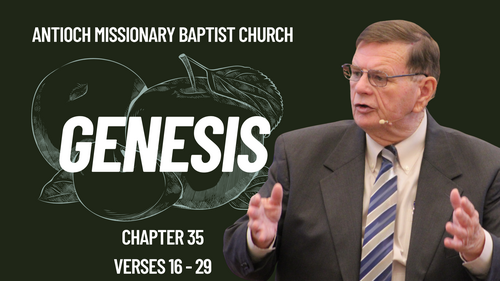
There is a moment in the life of every believer when the road ahead looks uncertain, the road behind looks like a series of mistakes, and the road beneath feels like it might give way entirely. It is precisely in that moment that a profound truth becomes available to those willing to receive it: you are not stumbling through life by accident. You are on a journey. And that journey has a purpose far greater than your comfort in the present moment.
The life of the patriarch Jacob, recorded in the book of Genesis, is one of the most honest and unvarnished portraits of a man on that kind of journey. He is not a hero in the conventional sense. He is a man who makes poor decisions, drags his feet when God gives clear direction, and repeatedly walks away from the very presence of God the moment things start to go well. He is, in other words, remarkably familiar.
The life of the patriarch Jacob, recorded in the book of Genesis, is one of the most honest and unvarnished portraits of a man on that kind of journey. He is not a hero in the conventional sense. He is a man who makes poor decisions, drags his feet when God gives clear direction, and repeatedly walks away from the very presence of God the moment things start to go well. He is, in other words, remarkably familiar.
Walking Away from the Mountaintop
In Genesis 35, Jacob has just had a profound encounter with God at Bethel. God has reaffirmed his name, his calling, and his covenant. It is a mountaintop moment in every sense of the phrase. And then, almost immediately, the text records a devastating little phrase: "then they journeyed from Bethel."
That is where the trouble begins. Not in the valley. Not in the wilderness. But the moment after the encounter.
There is a counterintuitive truth embedded here that deserves serious reflection. The mountaintop experience, the moment of spiritual clarity and closeness with God, can become its own kind of danger. When we feel we have received enough of God's presence to sustain us for a while, we are tempted to take that feeling and go operate on our own. We leave the place of encounter and begin making decisions without checking with the one who called us there in the first place.
Jacob does exactly this. And what follows is a cascade of grief, sin, and consequence that no one in his family escapes.
That is where the trouble begins. Not in the valley. Not in the wilderness. But the moment after the encounter.
There is a counterintuitive truth embedded here that deserves serious reflection. The mountaintop experience, the moment of spiritual clarity and closeness with God, can become its own kind of danger. When we feel we have received enough of God's presence to sustain us for a while, we are tempted to take that feeling and go operate on our own. We leave the place of encounter and begin making decisions without checking with the one who called us there in the first place.
Jacob does exactly this. And what follows is a cascade of grief, sin, and consequence that no one in his family escapes.
The Reality of Loss on the Road
Shortly after leaving Bethel, Rachel, Jacob's beloved wife, goes into labor. The birth is difficult and ultimately fatal. As she dies, she names the child Benoni, meaning "son of my sorrow." Jacob, in a tender act of love and perhaps defiance against grief, renames the boy Benjamin, "son of my right hand."
The passage does not soften the loss. Rachel dies. She is buried by the road to Bethlehem. Jacob sets up a pillar to mark her grave, a monument that would stand for centuries. And then the text moves on, because life on the journey moves on, even when we are not ready for it to.
This is one of the most honest things Scripture does. It does not pretend that following God insulates you from sorrow. It does not promise that obedience means the absence of loss. What it does promise, woven through the entire narrative of Jacob's life, is that God does not abandon his people in the middle of their grief. He continues to draw them forward.
The passage does not soften the loss. Rachel dies. She is buried by the road to Bethlehem. Jacob sets up a pillar to mark her grave, a monument that would stand for centuries. And then the text moves on, because life on the journey moves on, even when we are not ready for it to.
This is one of the most honest things Scripture does. It does not pretend that following God insulates you from sorrow. It does not promise that obedience means the absence of loss. What it does promise, woven through the entire narrative of Jacob's life, is that God does not abandon his people in the middle of their grief. He continues to draw them forward.
Sin in the Camp
The grief of Rachel's death is barely settled before the text delivers another blow. Reuben, Jacob's firstborn, commits a deeply shameful act, taking Bilhah, his father's concubine, as his own. Genesis 35 records it plainly and without embellishment. Jacob hears about it. And for now, he says nothing.
But the silence is not the end of the matter. Decades later, in Genesis 49, when Jacob gathers his sons to speak his final words over them, Reuben stands before his father expecting the honor due a firstborn. Instead, Jacob strips him of that honor. The consequences of sin do not always arrive immediately. But they arrive.
This is a sobering thread woven through the entire chapter. Sin has consequences. Not because God is waiting to punish, but because the journey has a design. God is shaping his people, refining them, drawing them toward something eternal. When we introduce sin into that process, we do not derail God's plan, but we do complicate our own path through it.
But the silence is not the end of the matter. Decades later, in Genesis 49, when Jacob gathers his sons to speak his final words over them, Reuben stands before his father expecting the honor due a firstborn. Instead, Jacob strips him of that honor. The consequences of sin do not always arrive immediately. But they arrive.
This is a sobering thread woven through the entire chapter. Sin has consequences. Not because God is waiting to punish, but because the journey has a design. God is shaping his people, refining them, drawing them toward something eternal. When we introduce sin into that process, we do not derail God's plan, but we do complicate our own path through it.
The Question Worth Asking
When hard things happen, the most natural human response is to ask why. Why did this happen to me? Why did this happen to my family? Why, after I tried to do the right thing, did everything still fall apart?
Those questions are understandable. They are human. But there is a better question available to those who understand they are on a journey. That question is simply this: God, what are you showing me?
Not every painful experience is a punishment. Not every loss is a consequence of disobedience. Some of it is simply the terrain of a fallen world through which God walks with his people. The invitation in those moments is not to demand an explanation, but to ask for eyes to see what God is doing in the middle of it.
Those questions are understandable. They are human. But there is a better question available to those who understand they are on a journey. That question is simply this: God, what are you showing me?
Not every painful experience is a punishment. Not every loss is a consequence of disobedience. Some of it is simply the terrain of a fallen world through which God walks with his people. The invitation in those moments is not to demand an explanation, but to ask for eyes to see what God is doing in the middle of it.
A Burial and a Reconciliation
The chapter closes with the death of Isaac at the age of 180. He is described as "old and full of days," a phrase that carries the weight of completion. He had done what he was given to do. His life was not without its own failures and shortcomings, but the arc of it bent toward faithfulness.
And then, quietly, the text offers one of its most hopeful images. Esau and Jacob, brothers who had been enemies for decades, stand together at their father's grave and bury him side by side.
Two men who had every reason to remain divided. Two men whose story began in rivalry and deception. And yet, at the end, they are standing together. God had been at work in both of their lives, even when neither of them was fully cooperating.
And then, quietly, the text offers one of its most hopeful images. Esau and Jacob, brothers who had been enemies for decades, stand together at their father's grave and bury him side by side.
Two men who had every reason to remain divided. Two men whose story began in rivalry and deception. And yet, at the end, they are standing together. God had been at work in both of their lives, even when neither of them was fully cooperating.
That is the nature of the journey. It does not require perfection. It requires surrender. It requires the willingness to keep moving toward God even when you have walked away, even when you have failed, even when the grief feels unbearable.
The road is long. But it leads somewhere. And you are not walking it alone.
The road is long. But it leads somewhere. And you are not walking it alone.
Watch the full sermon here:
Recent Takeaways
Archive
2026
January
2025
March
September
October
November
No Comments